Album Details
Label
Indies Scope
Genres
World
Styles
World


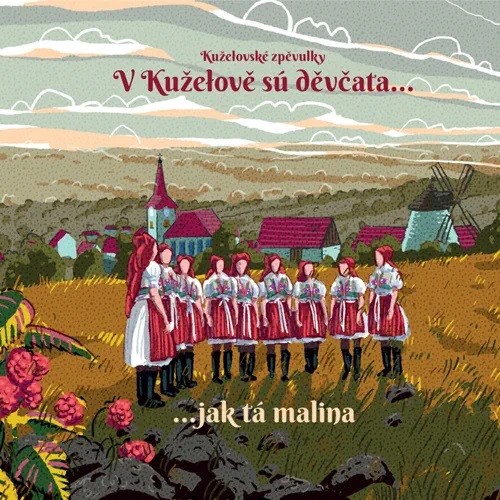
Although some of these Czech Republic women started singing together in 2005 at the Kuželov School under the direction of Alžběta Matulové, the girls folk choir Kuželovské zpěvulky (Singers from Kuželov) started as a group in 2011. After performing at the Horňácko Festival, additional engagements were booked. They began working under the tutelage of artistic director Martin Kománek from 2011-2016 for whom they hold a special place in their hearts. In late 2016, this collaboration ended and the choir set out independently, accompanied and advised by Roman Sokol’s Cymbal Ensemble.
Today, Kužełovské zpěvulky includes nine girls (Klára Halíčková, Erika Kolaciová, Klára Kostelanská, Miroslava Macková, Magdalena Mičková, Veronika Mičková, Marie Pomykalová, Adéla Sedlářová, and Markéta Sedlářová). These friends have experienced much together. They grew up in the region and share memories of first loves, pain, grief, sorrow, happiness and joy.
The title of their second album means “There are Girls in Kuželov ... Sweet as Raspberries.” We hear not only long peasant ballads or verbunks (i.e. recruitment songs) from the Horňácko region, but also one set from the Strání region. Choosing the songs together for this album project on their tenth anniversary, love is the common thematic thread running through all the messages. The choir is accompanied by Roman Sokol’s Horňácko Cymbal Ensemble (HCE) and Marek Potěšil’s HCE with instruments such as violins, viola, double bass, and cimbalom (hammered dulcimer). Featured soloists include Richard Hála and Martin Prachař.
Klára Halíčková stated, “It is impossible to say who came up with the whole idea. It came partly from us singers and partly from the music ensemble that helped us a lot. We took advantage of the fact that the music is played by skillful boys, who also sing beautifully …. and so we sang these love sets with them. I would say that these dialogue love songs are not so common in Horňácko, and you will not hear them often. And I would take this as an adjustment, otherwise we don't try to modernize anything and we sing as is the custom in the Horňácko region.”
Some of the more interesting tracks include “Dybych já věděła” (I Wish I Knew), “Zamiłovał sem si dívča” (I Fell in Love with a Girl), “Ej, hory, hory” (Hey, Mountains, Mountains), “Kebych była jahodú” (If I Were a Strawberry), “Vandrovali hudci” (Musicians Wandered), “Verbovali na vojnu” (They Were Recruited for War), “Nechoď ty k nám” (Don’t Come To Us) and “Čí je to dívčátko” (Whose Girl is She?). These are enchanting folk songs from The Czech Republic, and if I only spoke the language, I would be singing right along with them. (Joe Ross, Roots Music Report)